
Military service may have ended decades ago, but the experiences, routines, injuries, and habits developed during those years can remain part of a veteran’s life well into older age. That doesn’t mean every veteran will have the same health concerns or want the same approach to care. It does mean that understanding someone’s service history can provide useful context when planning veterans care that respects the individual rather than focusing only on age or current limitations.
For adult children, this can be especially valuable when a parent begins needing more assistance at home. Some preferences that seem like simple personality traits may have deep roots in how that parent has approached responsibility, privacy, structure, or self-reliance for much of their life.
Military Service Is One Part of a Much Larger Story
Veterans represent people from different generations, branches of service, occupations, locations, and experiences. Some served during wartime, while others did not. Some experienced injuries connected to their service, and many did not.
Care should never be based on assumptions about what a veteran must have experienced.
Instead, service history can be considered alongside everything else that makes the person who they are: family life, career, health history, interests, cultural background, personality, and preferences.
For families, that means listening first. A parent may enjoy talking about military service and displaying photographs or memorabilia. Another may rarely discuss those years. Both preferences deserve respect.
Long-Standing Independence Can Make Accepting Help Difficult
Many older adults resist assistance, regardless of whether they served in the military. For some veterans, however, a strong preference for self-reliance, routine, or handling problems independently may influence how they respond when family members suggest care.
An adult child may see an obvious need for assistance while a parent sees a task that simply takes longer than it used to.
That difference in perspective can create tension. Repeatedly pointing out everything a parent can no longer do often makes the conversation harder.
A better approach is to discuss what support could allow the veteran to keep doing.
Help with laundry could conserve energy for a weekly outing. Meal preparation might make it easier to continue living at home. Transportation could allow someone who no longer drives to keep attending familiar activities.
Framing assistance around the person’s priorities keeps independence at the center of the conversation.
Earlier Experiences May Matter When Planning Daily Care
Families don’t need to question a veteran about sensitive experiences to provide thoughtful support. However, information the veteran chooses to share can help caregivers understand preferences and avoid unnecessary discomfort.
Some veterans may have physical conditions or injuries connected to earlier service. Others may have hearing or mobility limitations that developed later and have nothing to do with military life. What matters is understanding the person’s current abilities and following the appropriate care plan.
Families may find it useful to consider:
- Which daily routines does your loved one strongly prefer to maintain?
- Are there physical limitations that affect bathing, dressing, walking, or household tasks?
- Does the veteran prefer a highly structured day or a more flexible routine?
- Are there situations or environments the person prefers to avoid?
- What activities, hobbies, or relationships remain particularly meaningful?
- How does your loved one prefer caregivers to offer assistance?
These practical questions help personalize veterans care without requiring families to make assumptions about someone’s past.
Routine Can Provide a Valuable Sense of Continuity
Many seniors find comfort in predictable routines. For a veteran who has maintained structured habits for decades, consistency may be particularly meaningful.
Morning coffee at the same time, a regular walk, an afternoon television program, weekly lunch with a friend, or an established bedtime routine can provide anchors throughout the day.
Care can work around those routines rather than unnecessarily replacing them.
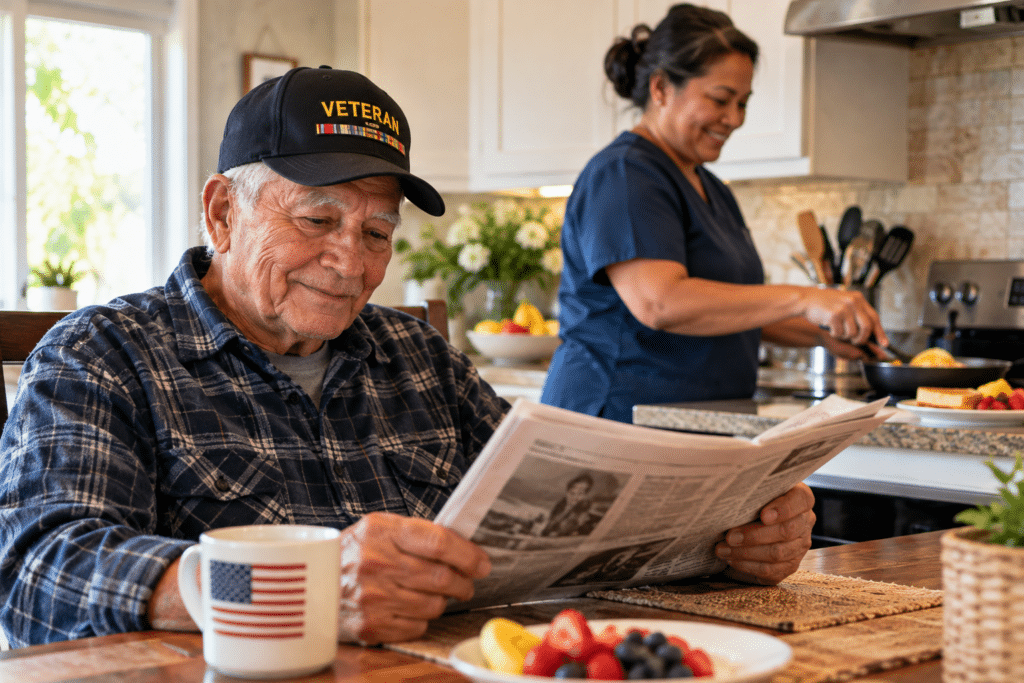
A caregiver might prepare breakfast while the senior reads the newspaper, assist with personal care at the preferred time, provide transportation for a regular appointment, or help keep the home organized according to the person’s usual preferences.
Wilson Homecare can build support around the individual’s existing habits so receiving assistance doesn’t automatically mean giving up the structure of everyday life.
Physical Needs Can Change Long After Service Ends
A health issue does not have to appear immediately after military service to influence later-life care. Older injuries can sometimes affect mobility as the body ages, while hearing changes or chronic discomfort may make certain daily activities more challenging.
At the same time, families should avoid automatically attributing every new problem to military history. Older adults can develop the same age-related health concerns as anyone else.
What matters most at home is how current abilities affect everyday life.
If standing for long periods becomes uncomfortable, meal preparation may become difficult. Reduced mobility can affect bathing, housekeeping, and errands. Hearing changes may make telephone conversations or communication in busy environments frustrating.
Rather than concentrating only on the underlying cause, practical care addresses how the person is functioning today.
Social Connection May Need More Attention After Retirement
A veteran’s social world can change considerably with age. Retirement may reduce regular contact with coworkers. Friends may move away or experience health problems of their own. Driving changes can make familiar activities harder to attend.
Someone who once had a highly active schedule can gradually spend more time alone without making a deliberate choice to do so.
Companionship can provide regular conversation and opportunities to remain engaged. Depending on the individual’s interests and abilities, that could mean playing cards, working on a hobby, going for a walk, sharing meals, looking through photographs, or attending community activities.
The veteran should guide those interactions. Military service may be something they enjoy discussing, but it shouldn’t become the only subject caregivers associate with them.
Families Don’t Have to Understand Every Experience to Provide Good Support
Adult children may know very little about a parent’s years in the military. Some veterans share detailed stories; others tell their families almost nothing.
Respectful care does not require uncovering the past.
It requires paying attention to the person in front of you: what makes them comfortable, what they value, what they still want to do independently, and where assistance would make everyday life easier.
Wilson Homecare approaches veterans care with that individual perspective. Military service can provide meaningful context, but it never replaces getting to know the person.
As needs change later in life, the most effective support recognizes both history and the present. For veterans, that means respecting the experiences that helped shape their lives while providing practical assistance based on who they are and what they need today.